The Enduring Craft Behind Paul McCartney’s Songs
Paul McCartney’s songwriting is often discussed through the obvious landmarks: “Yesterday,” “Let It Be,” “Michelle” and the global reach of his post-Beatles records. The more rewarding view is quieter. His melodies are shaped by instinct, his bass parts behave like melodies, and his words are fitted to vocal rhythm with unusual care. The craft lies in how those elements cooperate rather than in any single trick.
Across the Lennon–McCartney partnership and a long solo career, he moved from tight pop formulas to orchestral pop, experimental studio records, reggae, electronic music and folk-inspired songwriting. Each change refreshed the same basic materials: a memorable tune, strong harmonic movement, a text with emotional precision and an arrangement that makes every layer audible.
For Australian listeners, those recordings now arrive through familiar routes. A commute on a Sydney bus may carry a bass line from a favourite app, while a record-store browse in Melbourne or a live set in Brisbane can prompt a deeper look at the catalogue. ZONE makes that exploration easy by gathering songs, lyrics, guitar chords, MP3s and ringtones across popular genres.
His catalogue rewards a focused listen. Instead of treating every famous composition as an isolated hit, consider how form, instrumentation and arrangement evolve from one song to the next. That approach reveals a songwriter who could turn an unresolved feeling into a chorus anyone could carry away.
Melody, Memory, and Musical Economy
Melody is McCartney’s most transferable strength. “Yesterday” places a rising phrase above a simple repeating accompaniment, while “Blackbird” builds its narrative from a spare guitar pattern and carefully shaped vocal entries. “Here, There and Everywhere” shows another device: moving between registers without losing the song’s emotional line. A strong tune can sound inevitable because its repetitions conceal carefully varied intervals.
His melodic writing also changes with the words. On “Michelle,” the repeated name resolves chord tension; on “Lady Madonna,” voice and piano lock into a propulsive riff. McCartney often treats a phrase as a melodic event, changing a vowel, lengthening a line or placing silence before the answer. Those choices make the song feel spoken as much as sung.
Commercial directness is another part of the craft, though not the whole of it. “No More Lonely Nights” converts a personal plea into bright synth-pop, while “Band on the Run” expands a modest narrative into a shifting pop suite. The lesson for songwriters is not to imitate the surfaces, but to preserve clarity while allowing arrangement, texture and tempo to carry the idea further.
Harmony, Bass, and the Beatles Workshop
Harmony developed in the space McCartney shared with John Lennon. Their voices could move in parallel thirds, as in “And I Love Her,” or separate into wider lines that created a feeling of exchange. “Because” opens the vocal texture into long, floating phrases. Such writing makes an intimate relationship audible without relying on volume, distortion or dense instrumentation.
His bass playing is a separate instrument of identity. On “Michelle,” “Paperback Writer” and much of “Abbey Road,” the bass supplies the hook, answers the vocal line or changes the song’s apparent direction. A root note is often only the starting point. Sliding notes, held tones and unexpected leaps turn the low end into a melodic partner, demonstrating an ear for how parts converse rather than a need to fill every space.
The Beatles’ studio method gave McCartney a laboratory for rewriting a song after its first apparent form. “Eleanor Rigby” replaces pop-band architecture with a string octet; “Tomorrow Never Knows” lets a bass drone, vocal fragments and electronic effects dissolve conventional boundaries. His classical training also encouraged independent lines and extended form, later visible in “Liverpool Oratorio” and the “Abbey Road” medley. His later work continued that curiosity through synthesisers, orchestration and digital editing. A McCartney arrangement is rarely decoration placed after the song; it is a new version of the song.
Words That Sound Like Songs
McCartney’s lyricism favours concrete nouns, active verbs and the sounds of ordinary speech. “Eleanor Rigby” moves through images of loneliness without directly naming the emotion, while “Yesterday” turns recollection into a clean melodic narrative. He often writes the way people remember a room, a gesture or a fragment of dialogue. That specificity gives broad themes the texture of lived experience.
His characters are often observed from the edge. “The Long and Winding Road” presents a road as both literal route and emotional condition; “She’s Leaving Home” follows a departure from domestic routine; “Across the Universe” turns a personal address into a cosmic plea. The restraint matters. Strong verbs and simple rhyme leave space for the singer, preventing the text from becoming a lecture or an over-explained poem.
The relationship between words and notes is unusually exact. Consonants can mark the beat, while open vowels allow a phrase to float over changes in harmony. A bridge can clarify the emotional situation or release it through a sudden rhythmic shift. On “Silly Love Songs,” written in Majorca, simplicity became the defence; on solo acoustic pieces such as “These Days,” the voice remains close and the arrangement makes every word feel like a decision.
Rhythm, Record Making, and Australian Listening
Rhythm gives McCartney’s melodic writing its pulse. The twelve-string opening to “I Want to Tell You,” the shuffle of “Let It Be,” and the elastic groove of “Band on the Run” create different kinds of motion. He is willing to leave space around the beat, especially when reggae and spoken inflection enter the frame. This flexibility lets the lyric breathe rather than merely occupy the gaps between drum hits.
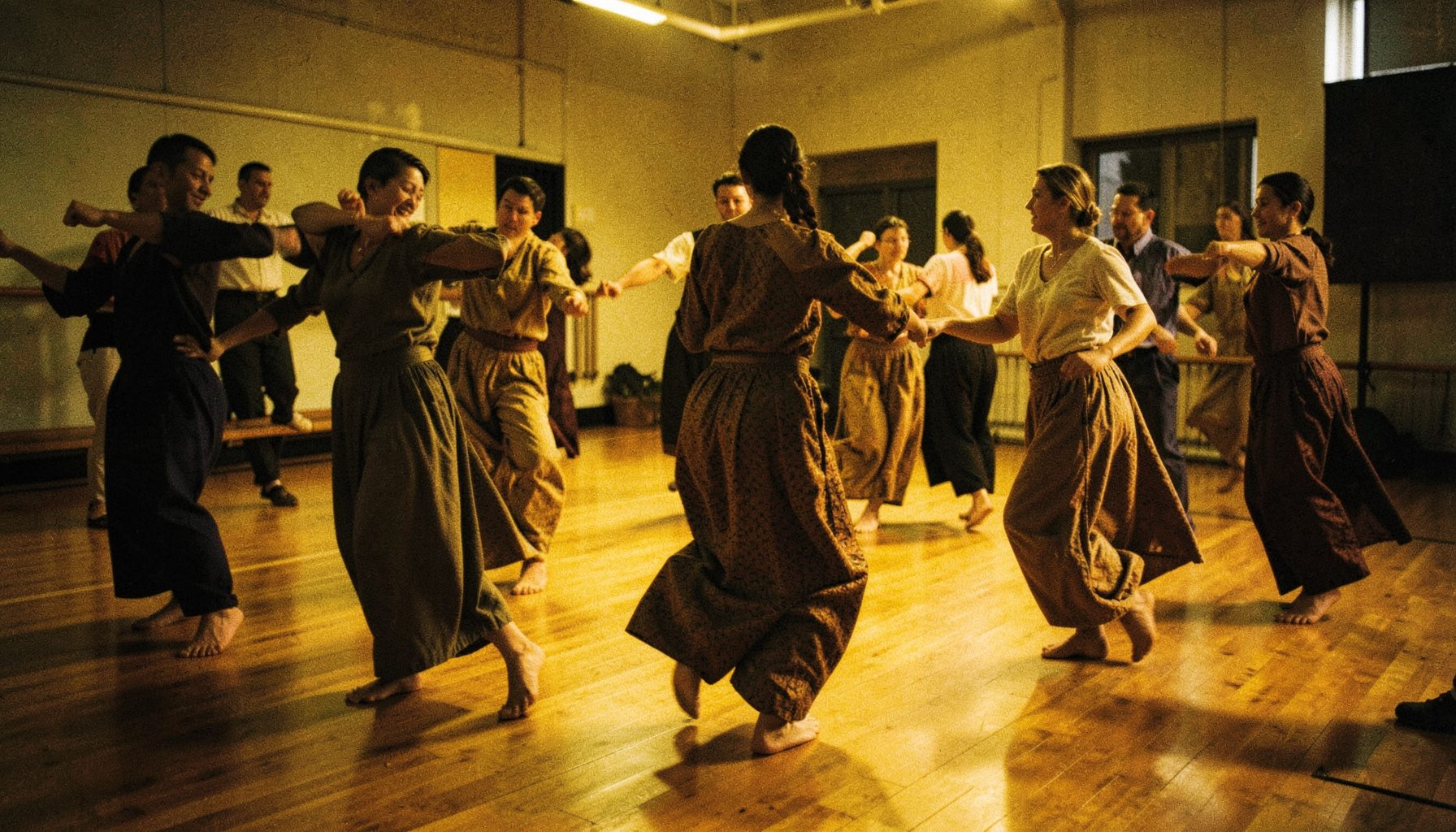
For an Australian reminder that rhythm is bodily as well as harmonic, Sydney’s OYIN Dance Collective demonstrates how call and response, pulse and collective movement can make a recording feel communal. The same principle applies in a song: the beat does not simply keep time; it directs attention and invites a response.
Australian music habits make McCartney unusually accessible. Many listeners move between Spotify, Deezer, iTunes, YouTube and SoundCloud, while independent record shops in Sydney, Melbourne and Adelaide make physical editions a social ritual. Amazon’s music store adds a purchase route for digital collections, and local venues in Brisbane, Perth and smaller regional towns provide another way into his songs, where covers and band performances expose the architecture beneath the polish.
Ownership and public performance are also part of the listening picture. Australia’s Copyright Act 1968 governs the use of protected recordings, and APRA AMCOS administers performance licences for broadcasters, venues and businesses that use music. These systems sit behind the apparent ease of pressing play, just as McCartney’s polished recordings sit behind a deliberate network of copyright, publishing and session decisions.
A Listening and Practice Guide
Listening closely is the fastest way to understand the craft. The following tracks and exercises suit different levels of attention, from a casual drive to an afternoon with a guitar or bass.
Songs worth hearing closely
- “Yesterday”: Hear how a rising vocal line creates motion over a restrained, repeating guitar figure.
- “Blackbird”: Watch alternate guitar tuning turn a conventional progression into a bright, conversation-like pattern.
- “Eleanor Rigby”: Notice how the string octet, vocal restraint and recurring phrase direct attention without adding a drum kit.
- “And I Love Her”: Track the independent motion of two voices as intimacy becomes audible through counterpoint.
- “Band on the Run”: Follow the song across its shifts in rhythm, texture and narrative scale rather than expecting one stable groove.
Exercises to practise
- Write from a concrete moment: Replace a general emotion with one action, object or remembered phrase.
- Map the vocal contour: Hum the chorus, then choose chords that support its rise, fall and pauses.
- Build a bass answer: Let the bass reply to key words instead of duplicating the root-note pattern.
- Test a sharper contrast: Give one section a different rhythm, register or arrangement while keeping the central tune intact.
- Record a spare version: Strip the track to voice and guitar, then decide which added part genuinely improves the song.
Each exercise reinforces a central lesson: a memorable song balances familiarity with surprise. McCartney can repeat a phrase, chord or rhythmic cell, but he usually changes its angle just enough to renew attention. Whether you are revising your own work or simply learning to hear arrangement, his records reward patience, repetition and close listening.
Explore McCartney’s catalogue on ZONE now: select a free MP3 or ringtone where offered, follow the lyrics and guitar chords, and compare the recording through an available streaming service. Then take one track into your own practice, whether that means a bedroom acoustic session, a band rehearsal in Adelaide or a shared playlist for a weekend drive.