The Golden Age Of American Folk Music
American folk music carries the sound of ordinary people making meaning from work, travel, hardship, faith, romance, and protest. Its “golden age” usually refers to the folk revival of the 1940s through the 1960s, when traditional ballads and acoustic performance moved from rural communities into coffee houses, record stores, universities, radio studios, and political gatherings.
The period was never a sealed-off chapter. It grew from older Appalachian ballads, African American spirituals, blues, labour songs, cowboy music, sea shanties, and immigrant traditions. Artists borrowed melodies, reshaped verses, and passed songs along with the practical freedom of an oral culture. A tune could belong to a community before it belonged to a famous performer.
For listeners in Australia, the appeal remains easy to recognise. Folk rewards close attention: a memorable chorus, a few guitar chords, and lyrics strong enough to survive without elaborate production. Whether you discover an old protest song through a streaming playlist, a pub session in Melbourne, or a downloadable lyric sheet, the music still feels direct and human.
Roots In Ballads, Blues, And Work Songs
The American folk revival depended on material that had circulated for generations. British and Irish ballads arrived with settlers, then changed as they encountered the landscape and social realities of North America. Songs about murder, migration, lovers, soldiers, and outlaws gained new verses in each region. Their melodies were often simple because they needed to be remembered and shared.
African American musical traditions were equally central. Spirituals, field hollers, blues, and gospel supplied rhythmic language, vocal intensity, and emotional depth. The banjo itself reflects African antecedents, while string-band music developed through exchanges between Black and white musicians. Any account of American folk that ignores this interchange presents a distorted history.
Work songs gave the genre a practical pulse. Railroad crews, miners, sailors, lumber workers, and agricultural labourers used rhythm to coordinate effort and to express frustration. Later singers transformed these pieces into concert material, but their original purpose mattered: folk music was often made within daily life rather than presented as separate entertainment.
The Revival Finds Its Audience
During the 1930s and 1940s, collectors and folklorists travelled through the United States recording traditional singers. The Library of Congress, independent researchers, and regional archives helped preserve performances that might otherwise have disappeared. Figures such as John Lomax and Alan Lomax brought field recordings to a wider public, though their methods and editorial choices remain subjects of debate.
The revival gained momentum after the Second World War. Urban audiences were drawn to music that sounded less commercial than swing or polished pop. Record labels issued anthologies, while colleges and left-wing organisations created networks for performers. The Weavers helped bring folk-based arrangements to a mass audience, proving that acoustic instruments could reach the charts.
This new popularity created tension. Purists wanted songs performed in recognisable traditional forms, while younger musicians treated folk as a living vocabulary. That disagreement still matters. Folk music is defined by transmission and adaptation, so a completely fixed definition would contradict its history.
Guthrie, Seeger, And The Political Song
Woody Guthrie became one of the defining personalities of American folk. His songs about migrants, poverty, labour, and belonging used plain language and instantly memorable melodies. “This Land Is Your Land” is often heard as a patriotic standard, yet its lesser-known verses challenge private ownership and economic inequality. That contrast explains Guthrie’s enduring power.
Pete Seeger carried traditional songs into union halls, schools, festivals, and civil rights gatherings. His five-string banjo, open singing style, and commitment to community participation made the audience part of the performance. Songs such as “Where Have All the Flowers Gone?” and “If I Had a Hammer” turned political reflection into collective action.
The movement also included many women whose contributions were undervalued by contemporary publicity. Lead Belly’s repertoire, Odetta’s commanding voice, Joan Baez’s interpretive precision, and the songwriting of Malvina Reynolds expanded the emotional and political range of the scene. Their work demonstrates that the folk revival was more varied than the familiar image of a man with an acoustic guitar.
Greenwich Village And The Singer-Songwriter
New York’s Greenwich Village became a major meeting place for folk performers in the late 1950s and early 1960s. Small clubs encouraged experimentation, and an artist could move from traditional ballads to original songwriting in the same set. The atmosphere rewarded distinctive lyrics, spare arrangements, and a willingness to comment on current events.
Bob Dylan arrived with a deep knowledge of Guthrie and older folk styles, then transformed the singer-songwriter model. His early work used narrative detail, biblical imagery, surrealism, and social observation. Songs such as “Blowin’ in the Wind” became anthems, while later pieces expanded the possibilities of folk writing through unusual structures and dense poetic language.
The coffee-house circuit was crucial because it created an intimate relationship between performer and listener. In Australia, a similar feeling can be found in small acoustic rooms around Fitzroy, Newtown, or Fremantle, where a quiet crowd may notice a lyric before it notices the production. Folk thrives in spaces where attention is part of the arrangement.
Protest, Civil Rights, And Cultural Memory
Folk music became closely associated with the civil rights movement because it could be learned quickly and sung by large groups. “We Shall Overcome,” shaped by African American gospel and labour traditions, carried a history far older than its best-known revival performances. Its strength came from collective ownership: the song belonged to the people singing it.
The repertoire also addressed nuclear anxiety, war, poverty, racism, and environmental damage. Songs could document events, preserve community memory, or challenge official narratives. They did not need to offer a complete political programme. A sharp image or repeated line could make injustice emotionally legible.
That documentary role has parallels in Australian music. Local folk and roots performers have long written about drought, mining, bush work, migration, Indigenous rights, and the uneven geography of opportunity. Listening to American protest songs alongside Australian bush ballads reveals different histories, but also a shared belief that music can record what newspapers overlook.
From Folk Rock To Global Influence
By the mid-1960s, folk began mixing with electric blues, rock, soul, and emerging pop production. Dylan’s electric performances caused controversy because some listeners believed amplification betrayed folk principles. In practice, the change showed how flexible the tradition had always been. Electric instruments gave folk songwriting a larger stage without removing its narrative core.
The Byrds, Simon & Garfunkel, Joni Mitchell, Crosby, Stills & Nash, and many others carried folk ideas into the album era. Their harmonies, literary lyrics, and carefully arranged guitars influenced rock, country, indie music, and contemporary acoustic pop. Folk became less a strict instrumentation category than a method of writing and performing.
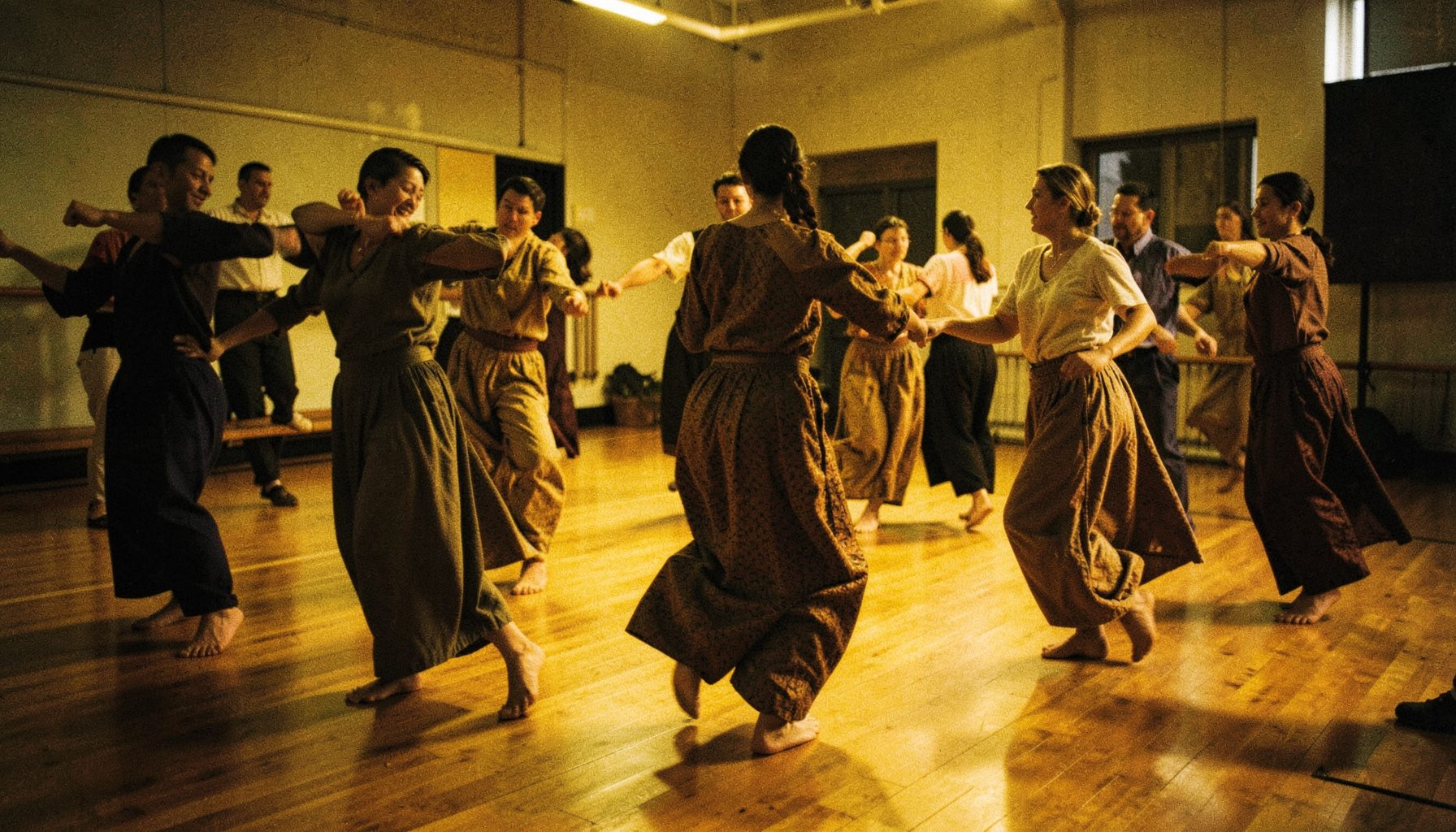
The influence reaches well beyond the United States. British folk revivalists, Australian country writers, contemporary Americana artists, and global singer-songwriters have all absorbed its techniques. Even a dance performance can draw on the same principle of communal storytelling; the dance traditions surrounding a song often reveal how rhythm carries memory through bodies as well as voices.
Hearing The Revival In Australia Today
Australian listeners encounter this repertoire through several routes. Streaming services make classic albums available beside current folk, alt-country, and roots releases, while community radio continues to support specialist programming. The market is spread across major services such as Spotify, Apple Music, YouTube, Deezer, and Amazon Music, with independent labels and artists often relying on direct sales and live touring.
Local geography shapes the listening experience. A bush ballad may feel different after a drive through regional New South Wales, while a labour song can take on new meaning in a mining town in Western Australia or a coastal community in Tasmania. In Brisbane, Sydney, and Melbourne, folk clubs and songwriter nights connect archival repertoire with new compositions. “Good on ya” is a fair response when a performer makes an old song feel present rather than museum-bound.
Lyrics and guitar chords also help explain why this music remains accessible. A beginner can learn a three- or four-chord arrangement, then adjust the tempo, vocal phrasing, or verses for a local audience. Sites that collect lyrics, chords, MP3s, and ringtone versions make discovery convenient, though listeners should use authorised downloads and official artist pages where available.
Building A Rich Folk Listening Habit
A thoughtful listening path should move between field recordings, revival albums, protest songs, and later reinterpretations. Avoid treating famous names as the whole story. Explore regional voices, Black folk traditions, women songwriters, union music, and artists who resisted easy classification.
Use the following approach to deepen your journey:
- Begin with Woody Guthrie, Lead Belly, Pete Seeger, Odetta, and Joan Baez to hear the revival’s central voices.
- Compare traditional performances with later versions by Bob Dylan, Joni Mitchell, The Byrds, and Simon & Garfunkel.
- Follow the songwriters behind protest standards instead of listening only to the most famous recordings.
- Read the lyrics while listening, then learn a simple chord pattern to understand the song’s structure.
- Add Australian folk, bush ballads, and contemporary roots artists to place the American repertoire in a local context.
The best catalogue is personal and gradually expanding. Save several versions of the same song, listen for altered verses, and notice how tempo and vocal tone change its meaning. A folk standard is rarely finished; every performance adds another layer of memory.
Start your own listening trail through classic recordings, living-room guitar versions, and contemporary Australian interpretations. Explore the lyrics, chords, and authorised audio options available across your favourite music platforms, then share the songs in a session where the tradition can continue through your own voice.